







Bootcamp · Full-Stack Rust

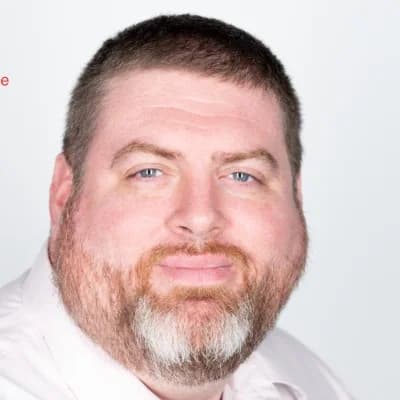
Tiago Ntalani

JavaScript/React/Python · computer science engineering degree

Tiago graduated with a computer science engineering degree from India in 2024, with a background in JavaScript, React, and Python. He first touched Rust through a Bitcoin CLI program out of Nigeria, assuming the language was strictly for low-level systems work, until a LinkedIn post about full-stack Rust convinced him otherwise.

He learned alongside a cohort from Nigeria, Poland and France, built his first full-stack CRUD app on Axum and Leptos, then scaled the same patterns into an Airbnb-clone.

JS/React
Frontend background before Rust
Python
Data work and game development
CS degree
Computer science engineering, India, 2024
Bitcoin
First Rust code: a Bitcoin protocol CLI client
The challenge

Backend concepts, not just Rust syntax

Tiago had written frontend and scripting code before, but never a real backend. The bootcamp meant learning routing, request handling, and ownership through Axum at the same time as Rust itself, on top of a borrow checker and lifetimes that gave him no shortcuts the way Express and Node.js had.

He got there by proving each concept on a small CRUD app first, then carrying the same patterns into a larger codebase.

  • •No prior backend experience, learned Axum from scratch
  • •Borrow checker and lifetimes were the first real wall
  • •Leptos as familiar ground, Axum as the new territory
The outcome

A shipped Airbnb-clone capstone

Tiago went from a self-taught start on Rust to a shipped Airbnb-clone built on Axum and Leptos, with the frontend and backend in one language.

He found Leptos' component model close enough to React to pick up fast, which let him spend his effort on the server side, where the real learning was.

  • ✓Full-stack Airbnb-clone shipped on Axum and Leptos
  • ✓Comfortable moving between JS/React and Rust mental models
  • ✓Backend concepts he can explain, not just syntax
[ Foundations ]

From a Bitcoin CLI tool to full-stack Rust

Tiago came in with a computer science engineering degree and a background in JavaScript, React, and Python. His entry point into Rust was a Bitcoin infrastructure program out of Nigeria, learning the protocol through a command-line client written in Rust. He assumed Rust was strictly a systems language, until a LinkedIn post about shipping full-stack web apps in Rust, front end, back end, and database, changed that.

He started self-taught, with the Rust book and GitHub repos, and the borrow checker and lifetimes were the first real wall. The full-stack angle is what made Rust worth the climb for him: one language and one type system from the database to the UI.

[ First backend ]

Learning what Express had been hiding

Tiago had written frontend and scripting code, never a server. The hardest part was not Rust syntax, it was the backend concepts themselves: routing, state shared across request handlers, and every ownership decision the borrow checker forces you to make explicit where Node.js and Express let you skip it.

His first full CRUD app on Axum and Leptos is where the pieces connected. Leptos felt familiar fast thanks to his React background, so the frontend became the stable ground while the Axum side carried the new concepts.

[ Capstone ]

Shipping the Airbnb-clone project

His capstone is an Airbnb-clone on Axum and Leptos. It takes the CRUD patterns from his first app and scales them into a larger codebase with multiple domains, routed pages and shared components, the kind of project he can walk an interviewer through end to end.

Building both sides in Rust means the listing types the server returns are the same types the components render. His take for other JavaScript developers: you need programming experience, not prior Rust.

The journey

One clear path through the build

Drag to explore · Select a milestone to read the full story

Max Wells

Mentor perspective

Tiago Ntalani started from JavaScript and treated every backend concept as something to prove in code before moving on. Small app first, then the same patterns at a larger scale. That habit of validating understanding with working software is what turns a frontend developer into a full-stack one.

Max Wells

Rustify mentor

Want results like Tiago's?

Max WellsAvailable for calls

Max Wells

Founder · Rustify

Book your Rust career diagnostic

30 minutes, 1:1 with Max. An honest read on where you are and whether Bootcamp or Mentorship fits, before you apply.

Only a few diagnostic slots left this week.

Applications are reviewed carefully.

← Back to case studies

More client journeys

See another path into Rust

Ready to Land a $80k+ Rust Job in the US or Europe?